
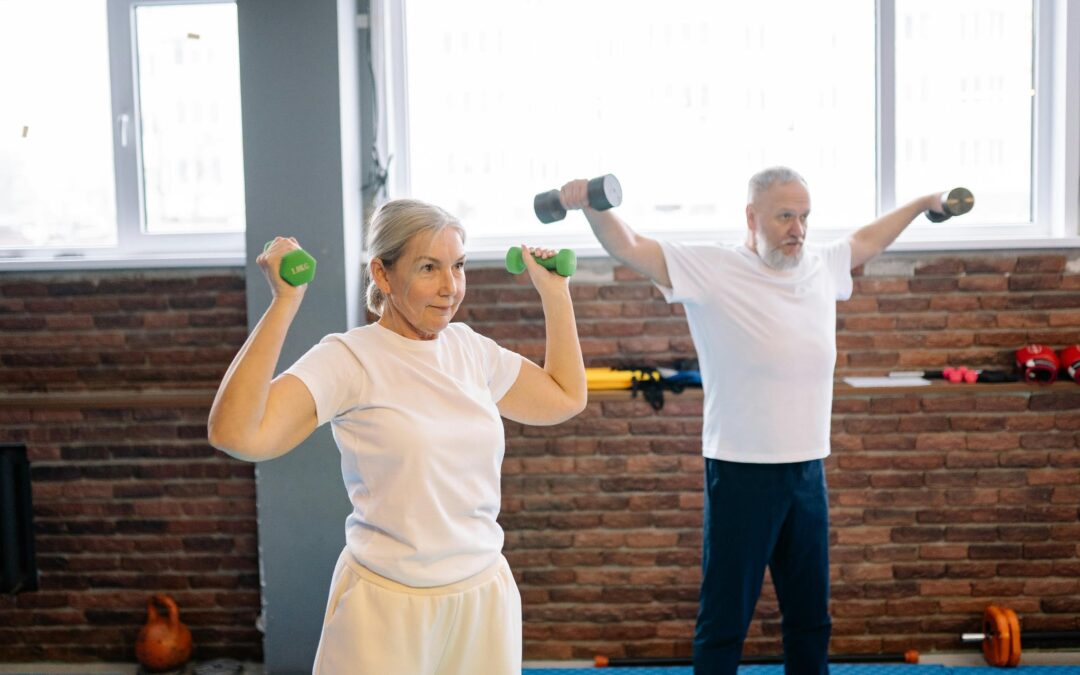
Recent global and national guidelines (including NHS, CDC, and WHO) all agree on one simple message: movement is essential at every age—and it’s never too late to start.
The Key Takeaways
1. A mix of movement matters most
The biggest shift in recent guidance is the emphasis on multicomponent exercise:
* Aerobic (walking, cycling)
* Strength (muscle work)
* Balance (fall prevention)
* Flexibility (mobility)
This combination is what keeps people independent, mobile, and confident. (CDC)
2. The “150-minute rule” still stands
Aim for:
* 150 minutes of moderate activity per week (e.g. brisk walking) OR
* 75 minutes vigorous activity
That’s roughly 30 minutes, 5 days a week—but it can be broken into smaller chunks. (CDC)
3. Strength and balance are non-negotiable
At least 2 days per week should include:
* Strength exercises (legs, arms, core)
* Balance work (essential for fall prevention)
This is now a major focus due to rising fall risk with age. (CDC)
4. “Some is better than none”
If full guidelines feel overwhelming:
* Start small
* Build gradually
* Every bit counts
Even light activity improves health and independence. (CDC)
5. Sit less, move more
Breaking up long periods of sitting is just as important as exercise itself. (nhs.uk)
6. The real benefits (beyond fitness)
Regular movement helps:
* Reduce falls
* Maintain independence
* Improve brain health
* Prevent chronic disease
* Boost mood and confidence (CDC)
What This Means in Real Life
The best approach isn’t intense workouts—it’s consistent, enjoyable movement that includes:
* Walking regularly
* Strength work a couple of times a week
* Balance practice built into sessions
This is exactly where outdoor walking + strength sessions (like yours) are spot on.
Sample Weekly Exercise Programme
Weekly Overview
* 3 walking sessions
* 2 strength + balance sessions
* Daily light movement
Session Structure (45–60 mins)
1. Warm-Up (5–10 mins)
* Gentle walk
* Arm swings
* Marching on the spot
2. Walking Intervals (20–25 mins)
* 3 mins steady walk
* 1 min brisk walk Repeat 5–6 times
Builds cardiovascular fitness safely
3. Strength & Balance Circuit (15–20 mins)
Repeat 2–3 rounds:
* Sit-to-stand (chair squats) × 10
* Wall push-ups × 10
* Heel raises × 12
* Step-backs (or lunges) × 8 each leg
* Single-leg stand (hold 10–20 sec each side)
Focus: legs, posture, fall prevention
4. Cool Down (5–10 mins)
* Slow walking
* Gentle stretches
* Deep breathing
Example Week
Monday: Walk + strength session Tuesday: Light activity (gardening, short walk) Wednesday: Walk intervals Thursday: Strength & balance Friday: Rest or gentle movement Saturday: Social walk / group session Sunday: Rest
Progression Tips (Great for your blog readers)
* Start with shorter sessions (20–30 mins)
* Increase walking time first
* Then add strength reps
* Encourage confidence, not perfection
The modern message is clear: exercise isn’t about pushing harder—it’s about moving smarter, more often, and in ways that support real life.
And the most powerful programme?
One people actually enjoy and stick to.